










![10 Best Floor Lamp for Reading [2026 Review]](http://www.homebaa.com/cdn/shop/articles/banner_c990b0a4-4743-4902-b6be-5609f7a21a90.webp?v=1766393057&width=400)




![How to Choose the Coffee Table Height? [2026 Newest Guide]](http://www.homebaa.com/cdn/shop/articles/coffee-table-height_2a1fd127-359f-4d5f-9ac1-3b232c7092a9.webp?v=1788166652&width=400)


Great Halloween lighting does more than make a room darker. It controls what guests notice first, gives ordinary furniture a mysterious silhouette, and creates enough warmth for everyone to feel comfortable. The best setup also works with your home instead of turning every room into a temporary prop closet.
This guide explains how to plan Halloween lighting for an American home, from a subtle autumn dinner to a full Halloween party. You will learn how to layer ambient, accent, and decorative light; choose colors that flatter a room; use chandeliers, pendant lights, wall sconces, table lamps, and string lights effectively; and avoid common electrical and decorating mistakes.
The central idea is simple: start with one permanent fixture that establishes the mood, then add a small number of temporary effects. A black chandelier can become the visual anchor, an amber pendant light can warm a bar or breakfast nook, and a few low-output accent lights can reveal pumpkins, branches, artwork, or a dessert table. When the season ends, the room still looks polished.
Quick Jump Links
- How to Plan Halloween Lighting
- The Three Lighting Layers
- Best Halloween Light Colors
- Room-by-Room Halloween Lighting Ideas
- Choose a Halloween Lighting Style
- Halloween Party Lighting
- Homebaa Lighting Recommendations
- Halloween Lighting Safety
- Buying and Setup Checklist
- Frequently Asked Questions
How to Plan Halloween Lighting Before You Buy
Before choosing bulbs or fixtures, decide what kind of night you are creating. A family movie evening needs soft pathway light and a cozy glow. A dinner party benefits from flattering light over the table and small pools of illumination around the room. A haunted-house-style event needs stronger contrast, concealed accent lights, and carefully planned traffic routes.
Walk through the space after sunset with the normal lights on. Identify the places where people will enter, sit, eat, take photographs, and move between rooms. These activity zones need usable light even if the surrounding room is theatrical. Stairs, thresholds, cords, food service areas, and bathrooms should never disappear into darkness.
Next, choose a focal point. In a dining room it may be a Halloween chandelier above the table. In a living room it may be a mantel, console, or large black branch arrangement. In an entry it may be a pendant light surrounded by paper bats or a mirror that reflects warm candle-style bulbs. One clear focal point usually feels more intentional than many unrelated effects competing for attention.
Easy planning formula: choose one permanent statement fixture, one color story, and two or three temporary accents. This creates a complete Halloween atmosphere without making the room feel cluttered.
Finally, inventory what you already own. Black metal furniture, dark-framed mirrors, amber glass, brass accessories, white pumpkins, red textiles, dried branches, and neutral candles can all support seasonal lighting. Halloween decor lighting is most convincing when the light reveals existing textures rather than covering every surface with novelty decorations.
Build the Mood with Three Lighting Layers
A successful lighting plan uses layers. Each layer has a different job, and together they make the room atmospheric, practical, and visually deep.
1. Ambient light: the base glow
Ambient light is the general illumination that lets people understand the room. For Halloween, reduce its brightness rather than eliminating it. A chandelier, pendant, ceiling light, or shaded floor lamp can provide this base layer. If the fixture is dimmable and the bulb is compatible, begin around one-third to one-half of normal brightness and adjust after the accent lights are on.
Warm white or amber light is usually the most flattering choice for the base. It makes wood, leather, brass, black metal, and autumn colors feel richer. It also gives faces a natural appearance, which matters at a dinner or party. A cool overhead light can flatten the room and fight with orange, purple, or red accents.
2. Accent light: the dramatic reveal
Accent lighting directs attention. Place a small uplight behind a plant to cast exaggerated leaves on the wall, aim a narrow beam toward a wreath or framed print, or place a battery-operated light behind translucent fabric that is safely separated from heat. The objective is not to illuminate everything. Shadows are useful because they create depth and allow bright details to feel brighter.
For spooky lighting, conceal the source whenever possible. Guests should first see the glow, silhouette, or texture it creates. A visible utility light often breaks the illusion, while a hidden light behind a console or inside an open decorative display feels mysterious.
3. Decorative light: the seasonal detail
Decorative lights include illuminated pumpkins, short string-light runs, flameless candles, neon-style signs, and novelty pieces. Use them as punctuation rather than the main sentence. A cluster of three flameless candles is often more effective than a line of fifteen. A single orange glass lamp can bring seasonal color into a room without looking disposable.
Keep decorative lighting in the same color family as the rest of the plan. If the chandelier uses warm candle bulbs, select warm or amber string lights instead of icy white. If the room is built around purple and blue, use those colors for the accents while keeping the functional light neutral enough for safe movement.
The Best Colors for Halloween Lights
Color changes the emotional temperature of a room. The strongest Halloween schemes usually use one dominant color, one supporting color, and warm white for visibility. Too many saturated colors can make furniture, food, and faces look disconnected.
| Color | Atmosphere | Best Places to Use It | Pairs Well With |
|---|---|---|---|
| Amber or warm white | Cozy, candlelit, vintage | Dining rooms, living rooms, entryways, reading corners | Black, brass, wood, cream, rust |
| Orange | Playful, festive, unmistakably Halloween | Table lamps, pumpkins, party stations, window accents | Black, warm white, deep green |
| Purple | Magical, theatrical, supernatural | Wall washes, photo backdrops, hidden uplights | Amber, black, muted blue |
| Red | Dramatic, intense, gothic | Small accent zones, bars, artwork, entry scenes | Black, smoked glass, low warm light |
| Green | Uncanny, laboratory-inspired, eerie | Plants, jars, props, themed food displays | Purple, black, neutral white |
For sophisticated Halloween lighting ideas, let black come from the fixture, furniture, or decoration rather than the light itself. Black metal absorbs and frames illumination, making crystal drops, glass shades, and exposed bulbs appear brighter. A black chandelier is especially effective because its silhouette remains strong during the day and becomes more dramatic when lit at night.
Colored smart bulbs can be useful, but saturated color is most convincing when it touches one wall or display rather than filling the entire home. Save full-room color changes for a short party moment. For the rest of the evening, a warm base with one colored accent is easier on the eyes and more flattering in photographs.
Room-by-Room Halloween Lighting Ideas
Entryway: create the first reveal
The entry tells guests what kind of experience is ahead. Keep the walking surface clearly visible, then create height with a pendant, lantern-style fixture, or candle chandelier. Black paper bats or lightweight branches can lead the eye upward, but they should remain clear of hot bulbs and moving doors.
Use a narrow table lamp or a pair of flameless candles on a console to prevent the lower half of the entry from feeling empty. If there is a mirror, position the light so it repeats the glow without shining directly into guests’ eyes. A dim reflection makes a small foyer feel deeper and gives simple decorations more impact.
Living room: make everyday seating feel cinematic
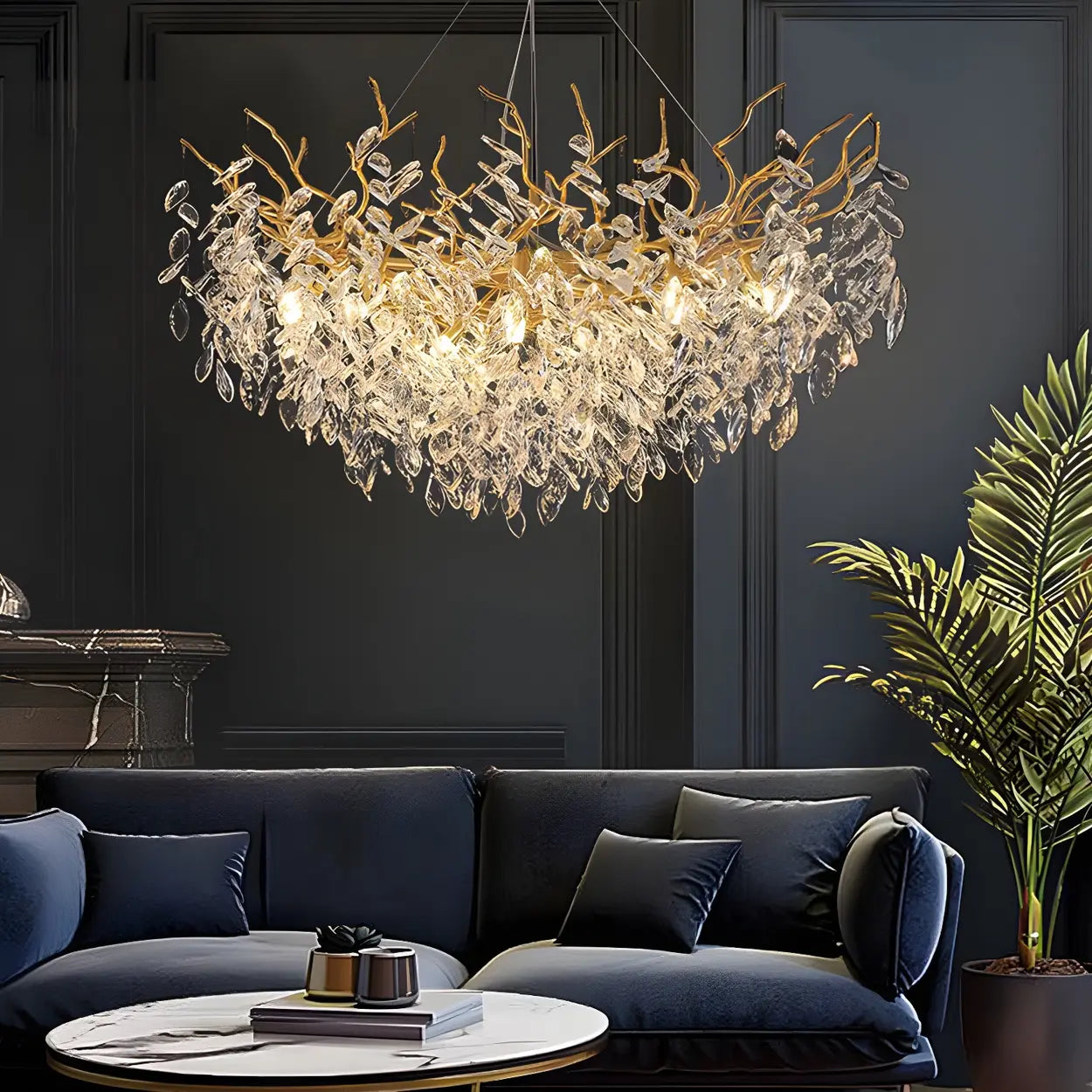
Turn off or dim harsh ceiling lights first. Use a floor lamp for comfortable seating, then add low accent light near the mantel, television console, or bookcase. A branch-style fixture, black crystal chandelier, or industrial multi-light design can become the permanent focal point that supports both Halloween decor and the room’s year-round style.
To make the space feel layered, illuminate at three heights: ceiling level, eye level, and below waist level. The ceiling fixture defines the room, a shaded lamp keeps faces comfortable, and a low uplight throws long shadows. This arrangement is more effective than placing several small lights at the same height.
Dining room: combine drama with flattering light
A dining room needs enough light to see food and faces. A black candle chandelier or crystal fixture provides the right balance: it can look gothic while still behaving like practical dining room lighting. If your fixture is dimmable, lower it gradually until the table feels intimate but glassware and serving dishes remain easy to see.
Keep the centerpiece below normal sightlines or make it tall and narrow enough that guests can see around it. Reflective pieces such as smoked glass, clear crystal, silver serving trays, and dark glossy vases multiply small points of light. Use flameless candles when decorations, sleeves, children, or pets could come close to the table.
Kitchen and breakfast nook: add warmth without losing function
Food preparation areas need clear task lighting. Keep countertop and range lighting neutral and bright enough for safe work, then put the seasonal mood over the island or table. An amber glass pendant creates a warm vintage glow that suits pumpkins, copper cookware, and wood surfaces without changing the kitchen permanently.
A small bowl of mini pumpkins, one dark runner, and an amber pendant may be enough. Avoid hanging temporary decorations where they could collect grease, touch a flame, or interfere with cabinet doors. The kitchen should feel festive but remain easy to clean and use.
Bedroom: choose cozy rather than theatrical
Halloween bedroom lighting works best when it stays restful. Replace bright overhead use with a warm bedside lamp, a shaded floor lamp, or a small orange glass table lamp. Add one string of low-output lights around a headboard or shelf only if the product is intended for that location and the cord can remain unobstructed.
Deep rust, plum, charcoal, and cream bedding will carry the theme without requiring colored light all night. Use a timer so decorative lights turn off automatically, and do not drape fabric over a bulb or shade to change its color.
Porch and outdoor approach: use products rated for outdoors
Outdoor Halloween lighting should make the route to the door obvious. Aim for a clear porch light, visible steps, and decorations that do not narrow the path. Add weather-rated string lights, landscape spots, or illuminated pumpkins only where the manufacturer permits outdoor use.
Do not move an indoor chandelier, table lamp, or extension cord outside simply because it will be used for one evening. Moisture, temperature, and physical exposure change the electrical risk. For a coordinated look, repeat the indoor color story outdoors using properly rated products: warm white at the door, amber at pumpkins, and one purple or green accent on a wall or tree.
Choose a Halloween Lighting Style That Fits Your Home
Gothic elegance
Start with a black candle chandelier, crystal drops, or an antique-inspired wall sconce. Add burgundy, charcoal, and aged metallic accents. Keep the bulbs warm and relatively low in brightness so the metal frame and crystals cast defined shadows. This style works especially well in dining rooms, foyers, and formal living spaces.
Industrial haunted loft
Choose exposed bulbs, black cages, rope details, and multi-arm fixtures. Amber glass and Edison-style bulbs create a workshop or old-laboratory feeling. Limit novelty pieces and let hardware, brick, wood, and metal carry the theme. This approach is ideal for open-plan rooms, kitchen islands, bars, and game rooms.
Modern monochrome
Use black, white, and one metallic finish. A sculptural black light fixture, white pumpkins, clear glass, and a few matte-black branches can look seasonal without becoming busy. Choose bulbs with consistent color temperature throughout the visible space. One purple wall wash can provide a controlled Halloween accent.
Warm harvest Halloween
For a family-friendly look, build around amber light, orange glass, wood, woven textures, and natural foliage. Use a farmhouse chandelier or globe pendant as the anchor. This scheme can remain in place through Thanksgiving because it suggests autumn first and Halloween second.
Playful party color
Use orange and purple as the main colors, then introduce green sparingly at a drink station, dessert table, or children’s craft area. Keep stairways and food service zones in warm or neutral light. Repeating the same two colors across several rooms feels more coordinated than assigning a different color to every fixture.
How to Design Halloween Party Lighting
A party lighting plan should guide movement as well as create atmosphere. Divide the home into zones: arrival, conversation, food and drinks, activity or dance, photo area, and quiet space. Each zone needs a visual cue.
- Arrival zone: use a clear warm path and one dramatic focal light near the entrance.
- Conversation zone: keep light soft but flattering, with shaded lamps or dimmed overhead fixtures.
- Food and drink zone: use enough neutral or warm light to identify ingredients, glassware, and spills.
- Activity zone: use controlled colored light, motion effects, or music-responsive lighting if appropriate.
- Photo zone: light faces from the front or a 45-degree angle; avoid relying only on light from below.
- Quiet zone: provide steady, warm light away from flashing effects for guests who need a break.
Test the whole route from the sidewalk to the bathroom before guests arrive. Sit in each main seat and look for exposed bulbs that create glare. Check photographs on a phone, because a scene that looks dramatic to the eye may appear too dark on camera. If possible, put the decorative lights on labeled switches, plugs, or smart controls so one person can adjust the mood without searching behind furniture.
Sound and light should support each other. Rapid color changes can overwhelm a dining space, while a slow flicker or gentle dimming effect may be enough near a mantel. Reserve flashing lights for a defined area and warn guests when they are used, since some people are sensitive to flicker.
Homebaa Halloween Lighting Recommendations
The following fixtures were selected because each creates a recognizable seasonal mood while remaining useful after October. Always check the current product page for available sizes, bulb requirements, installation details, shipping information, and current pricing before ordering.

Black Glass Candle Chandelier with Crystal Drops
A strong choice for gothic dining rooms and dramatic entryways. Its black frame creates a crisp silhouette, while glass details and crystal drops reflect warm candle-style light. Multiple light-count options help it suit different room sizes.
View This Chandelier
Steampunk Amber Glass Globe Pendant Light
Amber glass naturally supports a warm Halloween palette. The globe shade and rope detail work well over a bar, breakfast nook, kitchen island, or small dining table where a vintage industrial mood is more suitable than a large chandelier.
View This Pendant Light
Spider Mesh Multi-Light Edison Bulb Chandelier
The wide black multi-arm design creates an immediate spider-like impression without relying on a temporary novelty decoration. It suits larger dining rooms, loft-style living areas, restaurants, or party spaces that need a bold industrial focal point.
View This Multi-Light ChandelierOther useful fixture types include black candelabra chandeliers for formal rooms, vintage wall sconces for hallways, orange table lamps for bedrooms, and decorative floor lamps for empty corners. Match the scale to the room and confirm the bulb base, voltage, maximum wattage, mounting method, and installation requirements before purchasing.
Halloween Lighting Safety Checklist
Atmosphere should never depend on unsafe darkness or improvised electrical work. Use these precautions for both permanent fixtures and temporary Halloween lights:
- Inspect light strings, plugs, sockets, and extension cords before use. Do not use products with cracked parts, loose connections, exposed wire, or damaged insulation.
- Use indoor products indoors and outdoor-rated products outdoors. Outdoor connections should use appropriate weather protection and GFCI-protected receptacles.
- Choose products tested by a nationally recognized testing laboratory when applicable, and follow all manufacturer instructions.
- Do not overload receptacles, power strips, or extension cords. Check the ratings of every component and the total connected load.
- Keep cords out of doorways, walkways, and places where furniture can pinch them. Never hide energized cords under rugs.
- Keep bulbs and electrical decorations away from curtains, dried leaves, paper, costumes, upholstery, and other combustible materials.
- Use flameless candles where children, pets, costumes, or decorations could reach an open flame.
- Turn temporary decorative lights off before leaving home or going to sleep unless the manufacturer specifically permits unattended operation.
- Hire a qualified electrician for new hardwired fixtures, unfamiliar wiring, high ceilings, heavy chandeliers, or installations that require structural support.
Important: a dim room still needs visible steps, thresholds, exits, and walking paths. Add atmosphere around the route, not at the expense of the route.
Final Buying and Setup Checklist
Use this list before placing an order or installing your Halloween lighting:
- Define the event: subtle seasonal decor, dinner, family night, or full party.
- Choose one focal point and one dominant color.
- Measure the room, ceiling height, table, and installation location.
- Confirm fixture dimensions, hanging length, weight, and mounting requirements.
- Check bulb base, bulb inclusion, maximum wattage, voltage, and dimmer compatibility.
- Plan ambient, accent, and decorative layers separately.
- Keep task areas, food zones, stairs, and exits properly illuminated.
- Use outdoor-rated equipment for every outdoor location.
- Order permanent fixtures early enough to allow for delivery and professional installation.
- Test the complete scene after sunset and adjust glare, shadows, and brightness.
Make Lighting the Center of Your Halloween Decor
A well-chosen fixture can shape the entire room before the first pumpkin or paper bat is added. Build your look around black candle chandeliers, industrial pendants, amber glass lamps, vintage sconces, and other designs that remain stylish throughout the year.
Shop the Homebaa Halloween Lighting CollectionHalloween Lighting FAQ
What is the best lighting for Halloween?
The best setup combines warm ambient light, focused accent light, and a small amount of decorative light. A black chandelier or amber pendant can provide the base, while uplights, flameless candles, or short string-light runs add shadows and seasonal color. Keep walking and food areas clearly visible.
How can I make my house look spooky with lights?
Reduce overall brightness, illuminate objects from unusual angles, and reveal only selected parts of the room. Uplight branches or plants, backlight translucent decorations, and use one saturated accent color against a warm base. Concealing the light source often makes the effect feel more mysterious.
Which color light is best for a Halloween party?
Orange and purple are the most recognizable combination. Amber and warm white create a sophisticated candlelit mood, red feels dramatic, and green creates an eerie laboratory effect. Use one dominant color and one accent so the space remains coherent and faces still look natural.
Can Halloween lighting look elegant instead of childish?
Yes. Choose a limited palette, a permanent statement fixture, and materials such as black metal, amber glass, crystal, brass, and dark wood. Use seasonal decorations sparingly. A black candle chandelier with warm bulbs can feel gothic in October and classic during the rest of the year.
Are LED lights good for Halloween decorations?
LED lights are a practical choice because they generally use less energy and run cooler than traditional incandescent alternatives. Select a color temperature that matches the room, confirm dimmer compatibility when needed, and follow the product’s connection limits and location rating.
How do I light a Halloween dinner table?
Use a dimmed chandelier or pendant as the main light, then add flameless candles or small shaded lights for sparkle. Keep centerpieces from blocking sightlines and make sure guests can see food, glassware, and serving pieces. Warm white and amber are usually the most flattering colors.
Can I use indoor Halloween lights on my porch for one night?
No. Use lighting, cords, and electrical accessories specifically rated for outdoor use. Even short exposure can involve moisture, temperature changes, or physical damage. Keep outdoor connections protected and use GFCI-protected power as appropriate.
How many Halloween lights should I use in one room?
There is no universal number. Start with one ambient source, one or two accent sources, and a limited decorative cluster. Add light only where the room is unsafe, visually flat, or missing a focal point. A few purposeful sources usually look better than many scattered ones.
When should I install Halloween lighting?
Permanent fixtures should be selected and installed well before the event, especially if professional installation or shipping is required. Temporary decorations can be added closer to Halloween. Test everything after dark several days in advance so there is time to replace damaged items or adjust the layout.
What Halloween lighting can stay up all year?
Black chandeliers, candle-style fixtures, amber glass pendants, industrial cage lights, vintage sconces, and sculptural table lamps can all work year-round. Change the surrounding accessories and bulb brightness after Halloween rather than replacing the central fixture.


![10 Common Types of Light Fixtures [2026 Newest]](http://www.homebaa.com/cdn/shop/articles/home-lighting-types_500x.webp?v=1766396081)


