










![10 Best Floor Lamp for Reading [2026 Review]](http://www.homebaa.com/cdn/shop/articles/banner_c990b0a4-4743-4902-b6be-5609f7a21a90.webp?v=1766393057&width=400)




![How to Choose the Coffee Table Height? [2026 Newest Guide]](http://www.homebaa.com/cdn/shop/articles/coffee-table-height_2a1fd127-359f-4d5f-9ac1-3b232c7092a9.webp?v=1788166652&width=400)


Choosing the right console table size affects your room layout and function. Too large and it blocks walkways; too small and it looks out of place against the wall. This guide covers console table dimensions to help you find the right fit for your space.
Table of Contents
Standard Console Table Dimensions

Most console tables follow similar size standards that work well in typical homes. Here are the standard measurements you'll encounter:
| Dimension | Standard Range | Most Common | Notes |
| Height | 30-32 inches | 30-32 inches | Matches kitchen counter height; aligns with most sofa backs |
| Width | 24-72 inches | 48 inches | Varies widely based on space and purpose |
| Depth | 10-18 inches | 14 inches | Hallway tables: 10-12 inches; Statement pieces: 16-18 inches |
Height is the most consistent measurement across different styles. In contrast, width varies the most depending on your available space and how you plan to use the table. Depth typically depends on the room type and whether you need a space-saving option or more surface area.
Console Table Size by Shape
The shape of your console table affects its footprint and how it fits in your space. Here's how different shapes compare in terms of size:
| Shape | Typical Width | Typical Depth | Best For |
| Rectangular | 24-72 inches | 12-18 inches | Most versatile; works in almost any room; offers maximum surface space |
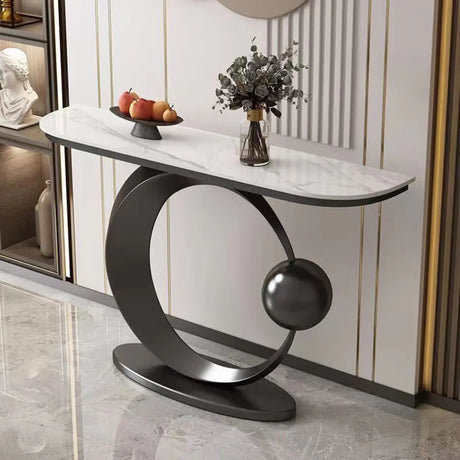
| Half-moon/Demilune | 30-48 inches | 12-15 inches (at widest) | Tight entryways and narrow hallways; curved shape saves visual space |
| Narrow Profile | 24-60 inches | 8-12 inches | Cramped spaces or behind sofas with limited clearance |
| Extra-Wide Statement | 60-72+ inches | 16-18 inches | Large entryways, spacious living rooms, or dining room walls |
Rectangular tables are the most common because they maximize surface area for their footprint. Half-moon tables work well when you need to save space without sacrificing function. Similarly, narrow profile tables provide just enough surface for essentials while keeping walkways clear.
Key Sizing Rules You Should Know

A few basic principles will help you choose the right proportions for your space.
The two-thirds rule
Your console table width should be roughly two-thirds of your wall length. For example, if you have a 6-foot wall, aim for a table around 48 inches wide. This creates balanced proportions without overwhelming the space.
Maintain walkway clearance
Always leave 30 to 36 inches of clear walking space in front of your console table. Measure from the wall to the nearest obstacle-whether that's the opposite wall, a sofa, or other furniture. Deeper tables need more room to work properly.
Match heights with nearby furniture
Your console table should align roughly with other furniture in the room. When placing a table behind a sofa, keep it 1 to 2 inches lower than the sofa back. In entryways, consider the height of doorway trim and nearby pieces.
Scale to your room size
- Small rooms: under 48 inches wide, 12-14 inches deep
- Large rooms: up to 72 inches wide, 18 inches deep
How to Find the Right Console Table Size?
Follow these steps to determine what size will work best in your specific space.
Measure your wall space
Start by measuring the total wall length where you plan to place the table. Note any obstacles like baseboards, electrical outlets, or heating vents that might affect placement. Then write down the exact measurement.
Check your clearance
Measure from the wall out to the nearest obstacle in front of it. This could be the opposite wall in a hallway, a sofa, or a doorway swing path. Then, subtract 30 to 36 inches from this measurement-whatever remains is your maximum table depth.

Consider nearby furniture
If placing behind a sofa, measure the sofa's length and height. Your table should be equal to or slightly shorter than the sofa length (6 to 12 inches shorter works well). Also measure any items you plan to place on top, like lamps or decorative objects, to ensure proper scale.
Plan for underneath storage
If you want to tuck baskets, stools, or other storage underneath, add 2 to 4 inches to your depth measurement. This ensures items fit comfortably without sticking out past the table edge.
Console Table Size Guide by Room
Different rooms have different size requirements based on how you'll use the table and the available space.
| Room Type | Width | Depth | Notes |
| Small Entryway (under 6 ft) | 24-36 inches | 10-12 inches | Keeps walkway clear |
| Medium Entryway (6-10 ft) | 40-50 inches | 12-15 inches | Balanced proportions |
| Large Entryway (10+ ft) | 54-72 inches | 14-18 inches | Statement piece option |
| Behind Sofa | Match sofa or 6-12 inches shorter | 12-16 inches | Height 1-2 inches below sofa back |
| Hallway | Leave 12 inches uncovered on each side | 10-12 inches max | Narrow profile essential |
| Bedroom (TV stand) | 48-60 inches | 14-16 inches | Standard height 30-32 inches |
| Bedroom (desk/vanity) | 40-50 inches | 16-18 inches | Extra depth for workspace |
Common Console Table Sizing Mistakes
Avoid these frequent errors when choosing your table size.
- Blocking walkways: Tables that are too deep leave insufficient walking space (need 30-36 inches minimum)
- Choosing too wide: Table overwhelms the wall and makes the space feel unbalanced
- Ignoring item heights: Not accounting for lamps, mirrors, or decor that will sit on top
- Forgetting underneath storage: Not measuring for baskets or stools you want to place beneath the table
- Skipping baseboard depth: Baseboards can add 1-2 inches, affecting how flush the table sits against the wall
Conclusion
Getting the right console table size involves carefully measuring your space, following basic proportion rules, and matching the table to your room's specific needs. Take time to measure before you buy, and when in doubt, go slightly smaller rather than too large.
FAQ
How do I know what size console table I need?
How do I know what size console table I need?
Measure your wall length and multiply by 0.66 to get an ideal width. For depth, ensure you leave 30–36 inches of clearance between the table and nearby obstacles.
What is the most common console table size?
What is the most common console table size?
The most popular dimensions are around 48 inches wide, 14 inches deep, and 30–32 inches tall, fitting well in most average homes.
Should a console table be the same length as a sofa?
Should a console table be the same length as a sofa?
No. It should be equal to or 6–12 inches shorter than your sofa to maintain balanced proportions without overwhelming the layout.
How deep should a console table be for a hallway?
How deep should a console table be for a hallway?
Choose 10–12 inches deep for standard hallways. In very tight spaces, ultra-narrow 8–10 inch designs work best.
Can a console table be too small?
Can a console table be too small?
Yes. A table that's too narrow looks visually off. Aim for at least 50–60% of your wall length for a balanced look.
What's the difference between console table depth and width?
What's the difference between console table depth and width?
Width measures the side-to-side length along the wall, while depth measures how far the table extends out into the room.